
1. Article Structure
- Introduction: Core application scenarios of two mainstream cement processing machines
- Working Principle & Core Features: Vertical vibration machine vs roller suspension machine
- Key Performance Comparison: Efficiency, fineness, maintenance and application scope
- Selection Guide: How to choose suitable equipment for cement production lines
- Conclusion & Inquiry Guidance
2. Citation Source
Shaanxi Provincial Department of Transportation. Vertical Vibration Compaction Technology for Cement Stabilized Base Materials (2025)
3. Main Article Content
In modern large-scale cement manufacturing, aggregate preparation, and construction material processing industries, vertical vibration machines and roller suspension machines have long stood as two core types of processing and conditioning equipment. Both devices play an irreplaceable role in raw material pretreatment, medium-stage crushing and grinding, as well as finished cement material compaction and shaping, yet they adopt completely different mechanical structures, working principles, and operational logic. For cement plant owners, project engineers, and production supervisors, distinguishing the differences between vertical vibration vs roller suspension machine is critical to optimizing production line layout, improving finished product fineness and uniformity, cutting down energy consumption, and reducing long-term equipment maintenance downtime. In cement and concrete processing projects, mismatched equipment selection often leads to unstable material quality, low hourly output, excessive power consumption, and frequent part replacement, which seriously affects overall project profitability and production continuity. For full-range professional cement processing equipment introductions, technical solutions, and industry application cases, visit our official homepage: https://www.cementmach.com. Our platform offers systematic equipment guidance for global cement manufacturers, road construction engineering teams, and building materials processing enterprises.
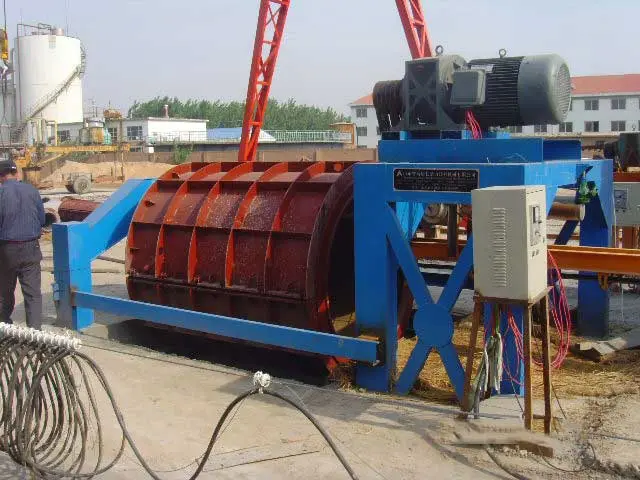
The vertical vibration machine is a high-precision processing device built on mature eccentric vibration mechanical theory, widely applied in fine grinding, material homogenization, and cement base material compaction. The core of the equipment lies in its multi-group symmetric eccentric shaft vibration system. During operation, multiple eccentric shafts rotate synchronously and reversely, which completely offsets horizontal lateral vibration force and superposes high-strength vertical vibration force. This pure vertical vibration output ensures that all material particles receive uniform, high-frequency vertical impact and extrusion force without horizontal material deviation or uneven stress distribution. Compared with traditional vibrating equipment, the vertical vibration machine features stable vibration amplitude, adjustable vibration frequency, and precise material processing accuracy. In cement raw material processing, it can effectively disperse agglomerated raw ore particles, optimize particle gradation, and remove internal gaps inside cement mixtures. After vibration treatment, cement materials show higher compactness, better fluidity, and more stable hardening performance in later concrete curing. Thanks to its precise control capability, this machine is highly favored in high-standard road cement base construction, high-grade cement finished product refinement, and special building material fine processing scenarios.
Different from the vibration-driven working mode, the roller suspension machine relies on mechanical extrusion and flexible suspension buffering to realize continuous large-capacity material processing. Equipped with a hydraulic suspension buffer system and heavy-duty roller extrusion mechanism, the equipment can generate stable static pressure and periodic dynamic pressure on stacked materials. The suspension structure is the core advantage of this machine: it allows the roller set to adaptively float up and down according to material thickness and hardness, avoiding rigid impact between mechanical parts caused by uneven material feeding. This flexible working mode greatly reduces mechanical wear, lowers operating noise and vibration amplitude, and extends the service life of wearing parts such as rollers and bearings. In actual cement production, raw materials often contain hard impurities, uneven particle sizes, and fluctuating feeding volumes. The roller suspension machine has extremely strong material adaptability, capable of stably processing high-hardness limestone, clinker, and mixed cement raw materials. With large feeding particle size tolerance and high hourly processing capacity, it fully meets the continuous operation demand of large-scale modern cement production lines.
To further clarify the practical application boundaries of vertical vibration vs roller suspension machine, we can conduct in-depth comparison from multiple dimensions including processing accuracy, production capacity, energy consumption, maintenance difficulty, and applicable scenarios. In terms of processing fineness and precision, vertical vibration machines take absolute advantages. The adjustable high-frequency vertical vibration can realize micro-level particle homogenization, making it the best choice for high-precision cement products, special cement materials, and road base fine compaction projects. However, limited by vibration structural characteristics, its single-machine processing capacity is relatively moderate, more suitable for medium and small-scale production links and fine processing procedures after coarse crushing. On the contrary, roller suspension machines focus on high-efficiency and large-volume processing. Although their processing fineness cannot reach the ultra-fine level of vibration equipment, they excel in coarse crushing, primary grinding, and bulk material preprocessing. Their hydraulic suspension protection system greatly reduces failure rates during long-time continuous operation, with lower daily maintenance frequency and longer continuous working cycle. To obtain detailed parameter comparison, customized model selection, and real production case data of vertical vibration machines and roller suspension machines, browse our professional product page: https://www.cementmach.com/products. We classify equipment according to production capacity, processing fineness and applicable working conditions to help users quickly match the most suitable equipment.
Scientific equipment selection is an important prerequisite for maximizing the economic benefits of cement production lines. For project investors and production managers, it is necessary to comprehensively evaluate core factors such as production line scale, raw material hardness and particle size requirements, finished product quality standards, and daily operating costs. If your project focuses on high-quality finished cement products, requires strict control over material fineness and compactness, and belongs to medium and small-batch refined processing scenarios, the vertical vibration machine is the most cost-effective option. It can effectively improve product qualification rate, reduce material waste, and enhance the market competitiveness of finished cement products. If you are running a large-scale cement factory with high daily output demand, focusing on bulk raw material pretreatment and high-efficiency continuous production, and pursuing stable long-term operation and low maintenance cost, the roller suspension machine will perfectly match your production needs. In actual industrial matching, many medium and large cement plants adopt a combined configuration mode, using roller suspension machines for front-end coarse processing and vertical vibration machines for back-end fine finishing, so as to realize high-efficiency and high-quality integrated production.
Every cement production project has unique working condition characteristics, and blind equipment selection will easily cause resource waste and production bottlenecks. Whether you need to compare technical parameters, confirm equipment matching degree, customize exclusive production schemes, or inquire about the latest factory prices, delivery cycles and professional after-sales service policies, you are welcome to contact our professional technical and customer service team at any time. We have rich experience in cement equipment design, manufacturing and project matching, and can provide one-stop full-service support including equipment selection consultation, production line scheme optimization, customized equipment manufacturing, on-site installation guidance and after-sales maintenance. We are committed to helping every customer reduce production costs, improve operating efficiency, and create greater industrial value in cement processing production.