
1. The Core Value of High-QualityConcrete Pipe Mold
The steel mold is one of the most critical core accessories of the cement pipe making equipment, which directly determines the surface finish, dimensional accuracy, structural stability and overall quality of finished cement pipes. Whether in municipal drainage, water conservancy engineering or road construction projects, the quality of cement pipe mold plays a decisive role in controlling product qualification rate and production efficiency. Choosing a suitable and well-maintained mold can effectively reduce defective products, avoid repeated rework, and greatly lower the long-term operating cost of the production line. As a professional Concrete Pipe Mold manufacturer, https://www.cementmach.com/ provides standardized, wear-resistant and high-precision pipe mold solutions for global concrete pipe production factories.
2. Scientific Selection Standards for Concrete Pipe Mold
Reasonable mold selection is the premise of stable pipe production. Enterprises need to select matched molds according to the actual pipe diameter, pipe type and engineering usage requirements. Common types include flat mouth, tongue and groove, and socket and spigot special cement pipe mold, which are applicable to different construction scenarios such as sewage discharge, water delivery and culvert pipelines.
In terms of material and process configuration, it is recommended to prefer thickened wear-resistant manganese steel Concrete Pipe Mold. This type of material features high hardness, strong compression resistance and excellent deformation resistance, which can adapt to long-term high-frequency vibration and extrusion in mass production. Meanwhile, users must strictly check the mold production quality: the mold wall thickness must be uniform, the welding joints should be firm and smooth without trachoma or gaps, and the overall dimensional accuracy must meet industrial standards, so as to ensure consistent specifications of each batch of finished pipes.
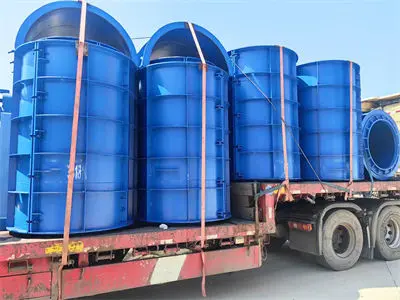
3. Standard Usage and Daily Maintenance Specifications
Even high-quality Concrete Pipe Mold requires standardized daily use and maintenance to maintain stable performance. After each batch of production is completed, workers must thoroughly clean the residual concrete mortar and hardened slag inside and outside the mold. Residual materials, if left for a long time, will cause surface unevenness of the mold, resulting in burrs, pits and cracks on the surface of finished pipes, seriously affecting product quality.
After cleaning, evenly apply a professional release agent on the inner wall of the cement pipe mold. This operation can effectively reduce concrete adhesion, facilitate smooth demolding, avoid pipe surface damage, and also reduce mold wear. In the daily handling and installation process, standardized hoisting operations must be followed to avoid violent collision, extrusion and falling of the mold. External impact will easily cause mold deformation and dimensional deviation, leading to unqualified pipe size.
4. Regular Maintenance and Idle Storage Management
Long-term cyclic use will inevitably cause slight wear, rust and local deformation of the Concrete Pipe Mold. Therefore, regular inspection and maintenance work must be arranged. It is necessary to regularly remove surface rust spots, perform partial repair welding for worn and damaged positions, and calibrate deformed mold bodies to ensure the flatness and roundness of the mold meet production standards, fundamentally avoiding common quality problems such as pipe cracks, uneven wall thickness and surface burrs.
For molds that are temporarily out of service, scientific storage management is essential. Clean the mold thoroughly again, apply anti-rust oil evenly on the metal surface, and place the cement pipe mold in a dry, ventilated and flat storage area, avoiding long-term exposure to humid air and outdoor rain erosion. Standard storage can effectively prevent mold oxidation and rust, extend the service cycle, and ensure the mold can be put into production normally next time.
5. Economic Benefits of High-Quality Molds and Standard Maintenance
A high-quality Concrete Pipe Mold produced by a professionalConcrete Pipe Mold manufacturer can achieve a service life of 5 to 8 years under standardized use and complete maintenance. Compared with inferior molds that are prone to deformation and damage, high-standard molds greatly reduce the frequency of replacement and maintenance, effectively save equipment investment and labor maintenance costs for enterprises, and improve the continuous production capacity and economic benefits of the production line. For durable and high-precision pipe molds and full-life technical support, welcome to visithttps://www.cementmach.com/.
