
In the rapidly expanding world of global infrastructure, the demand for high-quality drainage and sewage systems is at an all-time high. For plant owners and civil engineers, understanding the concrete pipe manufacturing process isn’t just about technical knowledge—it’s about choosing the right machinery to ensure durability, precision, and profitability.
At Forletor Machinery, we have spent over 15 years perfecting the equipment that powers this industry. Here is a deep dive into the modern production lifecycle of a concrete pipe.
Step 1: Precision Reinforcement Cage Welding
The structural strength of an RCC (Reinforced Concrete Cement) pipe starts with its steel skeleton. Using a manual process is slow and prone to error.
Modern plants utilize a Professional Reinforcement Cage Welding Machine. This equipment automates the winding and welding of longitudinal and centrifugal wires, creating a precise cage that fits perfectly into the pipe mold.
Step 2: Concrete Batching and Mixing
A consistent “zero-slump” or “dry-cast” concrete mix is vital. The ratio of cement, sand, and aggregate must be strictly controlled. Forletor’s solutions integrate seamlessly with Concrete Mixing Equipment to ensure that every batch provides the necessary density for the centrifugal or suspension forces to follow.
Step 3: Pipe Forming – The Suspension Roller Method
One of the most efficient ways to form a pipe is via the Suspension Roller Concrete Pipe Machine.
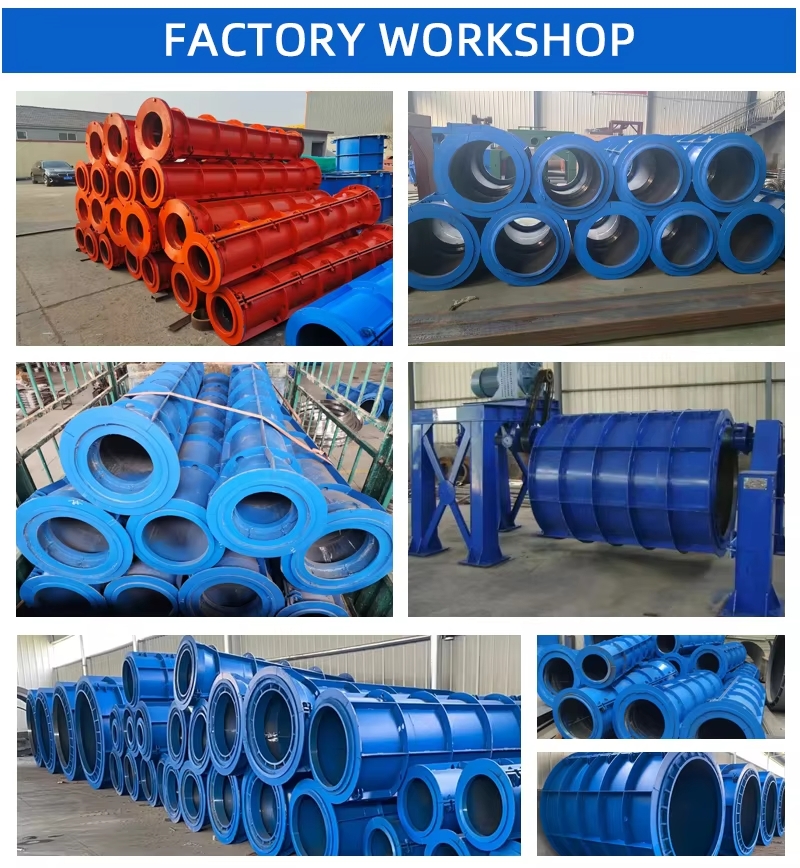
- How it works: The machine uses a roller shaft to support the Steel Cement Pipe Mold.
- The Benefit: As the mold rotates at high speeds, the roller applies intense pressure to the concrete, compacting it into a high-density wall. This method is ideal for producing pipes used in municipal drainage and culverts.
Step 4: Specialized Applications (Jacking Pipes)
For projects where traditional excavation is impossible (like under highways or railways), the manufacturing process shifts slightly to produce “Jacking Pipes.” These require extreme precision and strength, often produced for use with a Micro Tunneling Pipe Jacking Machine.
Step 5: Curing and Demoulding
After the pipe is formed, it undergoes curing—often using steam to accelerate the hydration of the cement. Forletor offers both Hydraulic and Manual Molds, allowing factories to choose between high-automation efficiency or cost-effective traditional methods depending on their scale.
Why Choose Forletor for Your Production Line?
As a leading Concrete Pipe Machine Manufacturer based in China, Weifang Forletor Machinery Manufacturing Co., Ltd. provides more than just hardware. We provide a complete industrial solution:
- Global Reach: Successfully exported to Ethiopia, Uganda, Egypt, Nigeria, and beyond.
- One-Stop Shop: From Gantry Cranes for moving heavy pipes to the smallest mold parts.
- Customization: Equipment compatible with multi-voltage standards for international markets.
Ready to Start Your Concrete Pipe Project?
The concrete pipe manufacturing process is only as reliable as the machines behind it. Whether you are looking for a Cage Welding Machine or a full production plant setup, our engineers are ready to help.
Contact Forletor Today for a customized quote and take your construction capabilities to the next level!