
The Suspended Roller Concrete Pipe Making Machine, with its core advantages of high cost-effectiveness, strong stability, and wide adaptability, firmly occupies the first position in the domestic cement pipe making equipment market and is the main equipment for township pipe factories and small and medium-sized municipal pipe production enterprises. The complete hanging roller pipe making unit includes seven core parts: the main engine, hanging roller spindle, steel mold system, drive motor, feeder, electric control system, and lifting equipment. The structural performance of each part directly affects the pipe qualification rate and equipment service life. Mastering its principles and maintenance plans can significantly reduce production losses.
The core workflow of the Suspended Roller Concrete Pipe Making Machine is clear: first, place the steel reinforcement skeleton into a customized steel mold, which is then fitted onto the suspended roller spindle; Start the motor to drive the spindle to rotate, and the steel mold rotates synchronously by frictional force; The feeder evenly feeds dry and hard concrete into the mold, and as the feeding amount increases, the pipe wall gradually thickens; The suspended roller shaft continuously rolls the concrete, combined with centrifugal force and vibration force, to quickly discharge the internal bubbles of the concrete, making the pipe wall dense and uniform; After the molding is completed, stop rotating and perform natural curing or steam curing after demolding, reaching the national standard compressive strength within 28 days.
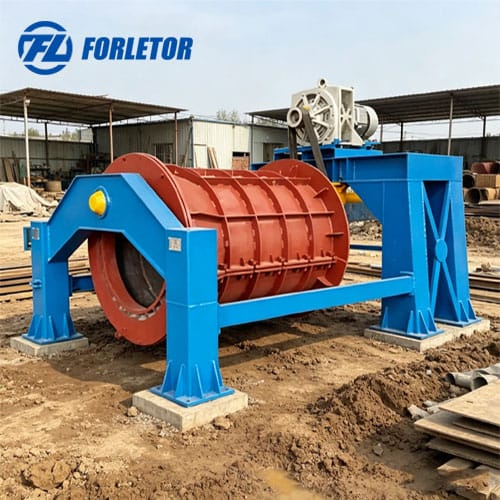
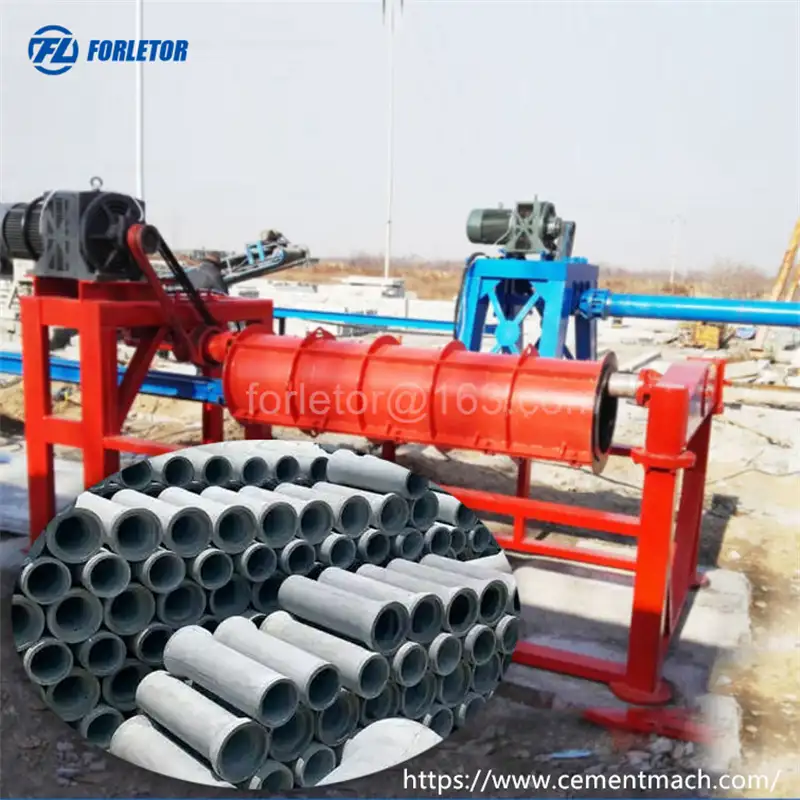
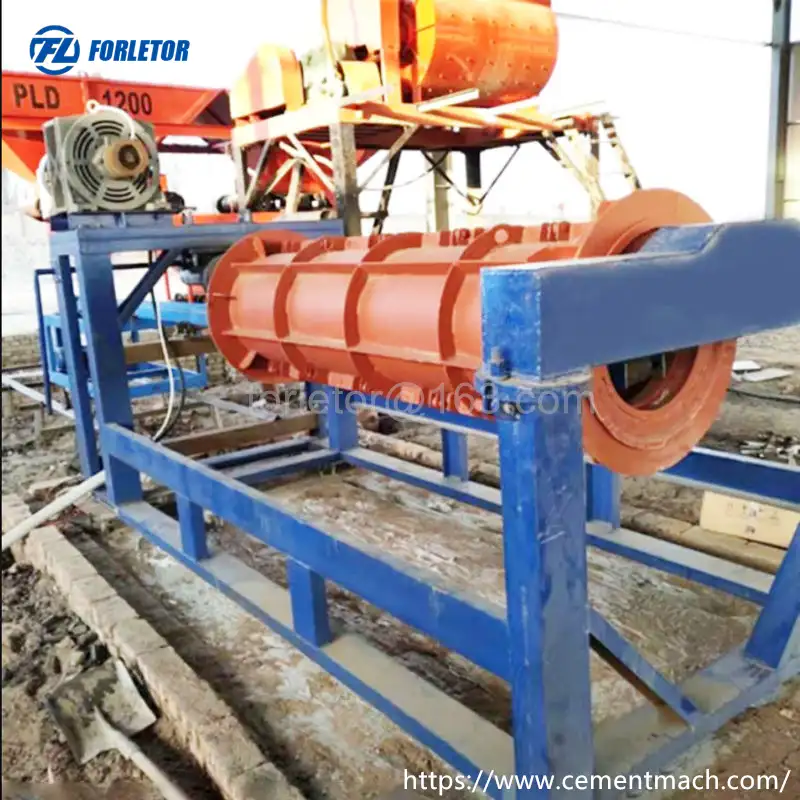
The core technological advantages of this device are outstanding: firstly, it has extremely strong adaptability, with the ability to replace flat mouth, enterprise mouth, and socket mouth molds in one machine, producing full specification pipes of Φ 300 3000mm; Secondly, it has high production stability, with no obvious faults during continuous 24-hour operation, and a single shift capacity of 80 to 120 meters, suitable for small and medium-sized production; Thirdly, the usage cost is low, with equipment procurement, infrastructure, and maintenance costs much lower than those of fully automatic extrusion equipment. It can be produced outdoors without the need to build a closed factory building; Fourthly, the quality of the finished product is reliable, with uniform wall thickness and high resistance to external pressure. Its ability to resist settlement and deformation is superior to that of ordinary centrifugal pipes, making it suitable for complex geological engineering.
Full cycle maintenance is the key to extending equipment life, which is divided into four levels: daily, weekly, monthly, and quarterly maintenance. Daily maintenance: Clean the residual concrete of the equipment daily, check the lubrication condition of the main shaft bearings, add special lubricating grease, and tighten loose bolts; Weekly maintenance: calibrate the coaxiality of the suspension roller shaft, check the tightness of the transmission chain, and clean the motor heat dissipation dust; Monthly maintenance: comprehensive inspection of the electronic control system and hydraulic components, checking for deformation and corrosion of the steel mold; Quarterly maintenance: replace aging bearings and seals, remove rust and weld steel molds, calibrate roller pressure. In winter, it is necessary to do a good job of antifreeze in the hydraulic system, and in summer, strengthen the heat dissipation of the motor. Standardized maintenance can ensure that the host can be used normally for more than 10 years, greatly reducing equipment replacement costs.
